How RÜÜT Works

How RÜÜT Works

Not fertilizer. Not potting soil. Living biology that follows different rules.


The Quick Version

RÜÜT is living biology that activates plant defense systems.

Hundreds of beneficial microbe species across 36+ bacterial phyla. Chitin from Black Soldier Fly exoskeletons. Organic matter that feeds soil biology for months. All of it derived from NYC restaurant food waste through a 24-day biological process we run in the Bronx.

Mix it with existing soil. Top-dress throughout the season. Brew it into foliar spray. One bag. Ten plants. One entire growing season.

That's the short version. Here's what's actually happening—and how to get the most from it.


The Gap We're Closing

The science is settled. Chitin from Black Soldier Fly frass activates plant defense systems. Peer-reviewed research from four continents confirms the mechanism. Systemic Acquired Resistance isn't theory—it's documented biology.

But knowing why something works doesn't tell anyone how to use it.

Most soil amendment instructions are useless. Either maddeningly vague ("apply liberally") or overwhelmingly technical ("incorporate at 2.5% v/v ratio"). Neither helps the gardener standing in the backyard, bag in hand, wondering what happens next.

We built this page to close that gap.


What Most Gardeners Assume

Three assumptions show up every time. All reasonable. All wrong.

"It's basically fertilizer."

Sprinkle. Water. Wait. More product, more growth. Effects visible in days. That's how fertilizer works—direct chemistry, fast results, linear relationship between input and output.

RÜÜT isn't fertilizer. It's an ecosystem.

"It works like potting soil."

Fill containers with it. Plant directly into it. Complete growing medium, ready to go.

RÜÜT isn't potting soil. It's a soil amendment—meant to be mixed in, not planted into.

"One application lasts all season."

Set it and forget it. Slow-release magic. One dose carries plants from May to September without thinking about it again.

That's how synthetic pellets work. RÜÜT isn't synthetic. Living biology needs feeding to stay alive.

Here's what changes everything: RÜÜT is alive.

And living biology follows different rules than dead ingredients.


What's Actually in the Bag

Open a bag of RÜÜT. You'll notice a few things immediately.

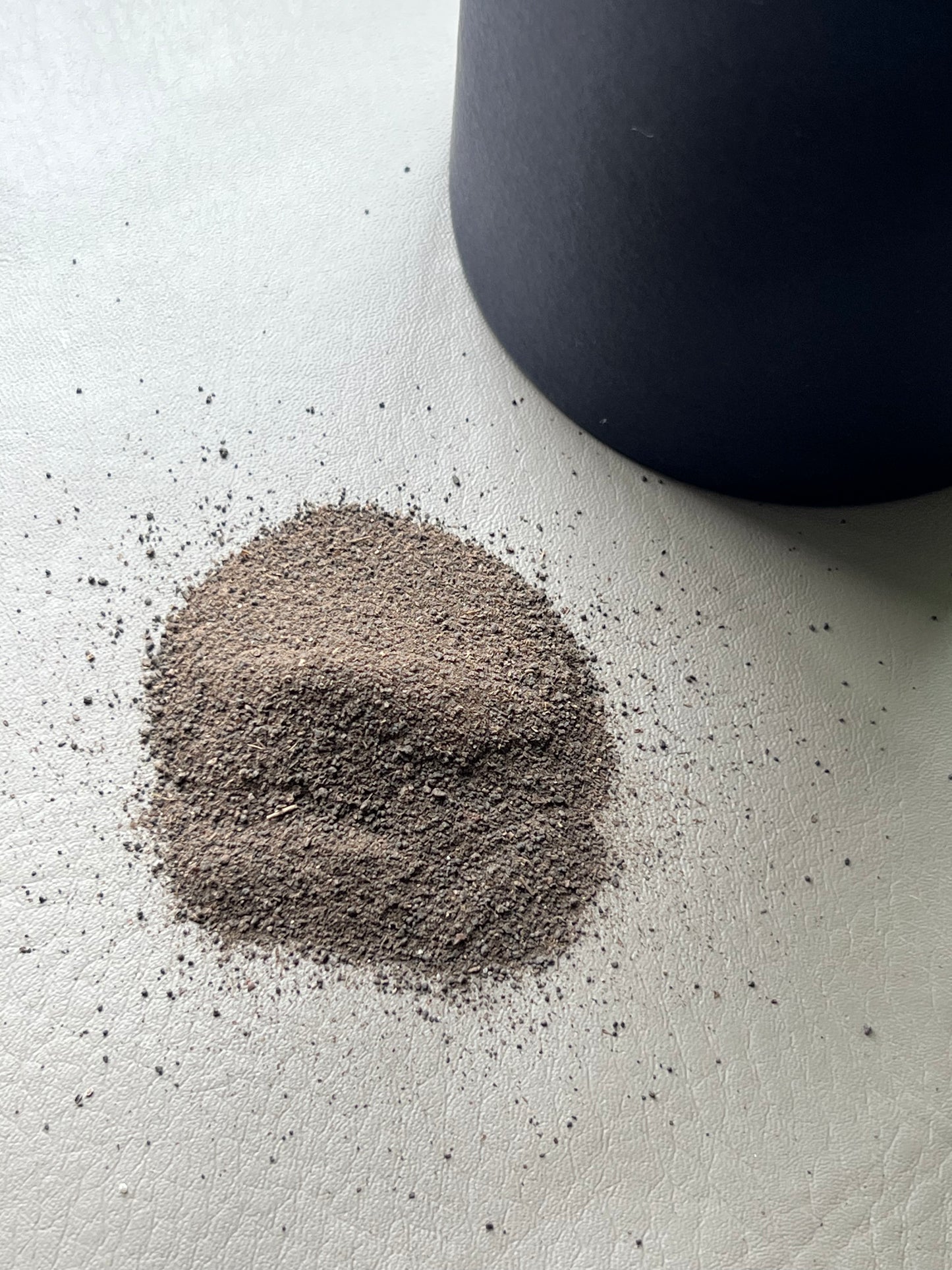
It smells like earth. Not ammonia. Not chemicals. Rich, complex—the smell of active decomposition in forest soil. That's the biology at work.

It has texture. Not uniform powder. Not identical pellets. Varied particles, visible organic matter, occasional white mycelium threads if you look closely. Signs of life.

It expires. Twelve months. That shelf life isn't a weakness—it's proof. Dead ingredients last forever. Living ecosystems don't.

What's inside:

  • Hundreds of beneficial microbe species across 36+ bacterial phyla
  • Chitin from Black Soldier Fly exoskeletons—10-30% by dry weight
  • Organic matter that feeds soil biology for months
  • Dormant ecosystems waiting for moisture to wake up

(That's not marketing language—we've had it lab-tested. The microbial diversity is measurable.)

Where it comes from: Every bag represents 22 pounds of NYC restaurant food waste, transformed through our 24-day biological process in the Bronx. Bioconversion, fermentation, thermophilic stabilization—three sequential stages, each building on the last. The complexity can't be rushed.

That's why it works. That's why it's different from amendments mixed in a warehouse in 24 hours.


The One Thing Everyone Needs to Know

RÜÜT is not a complete soil.

Read that again. This is the single most important thing to understand before first use.

RÜÜT cannot fill containers. Plants cannot grow in pure RÜÜT. Using it undiluted overwhelms roots and wastes product.

Think vitamin supplement. Not meal replacement.

Why?

Too nutrient-dense. Too biologically active. Too fine-textured for proper drainage. Plants need mineral soil or potting mix for structure and root support. RÜÜT provides the biology and nutrition. Existing soil provides the architecture.

The ratios that work:

Application Ratio Notes
Garden beds 1 part RÜÜT : 4 parts soil Mix thoroughly before planting
Containers 1 part RÜÜT : 5 parts potting mix Slightly lower ratio for drainage
Transplanting 1-2 tablespoons Directly in the planting hole

Get these ratios right, everything else follows. Get them wrong, results disappoint—not because the product failed, but because the application did.


Three Ways to Use It

Different situations call for different methods. Same living biology, three delivery mechanisms.

Method 1: Soil Mix

The foundation builder.

Mix RÜÜT into soil before planting. Start of season. New containers. Raised bed preparation. Any time soil gets built or refreshed.

How to do it:

  1. Measure one part RÜÜT to 4-5 parts soil or potting mix
  2. Blend thoroughly—no pockets of pure product, no unmixed clumps
  3. Fill containers or amend beds
  4. Plant seeds or transplants
  5. Water well to activate the biology

What happens underground: The microbial ecosystem establishes before plants even need it. Beneficial bacteria colonize root zones. Chitin-degrading organisms move in. By the time roots start growing, the support system is already in place.

Best for: Container gardens. Raised beds. New plantings. Any situation where you can mix soil before planting.


Method 2: Top-Dressing

The ongoing rhythm.

Sprinkle RÜÜT around plant bases during growing season. Every 2-3 weeks, May through September. The maintenance approach that keeps biology fed all season.

How to do it:

  1. Two tablespoons per plant (adjust up for larger plants, down for herbs)
  2. Ring around the base, 2-3 inches from the stem
  3. Extend outward 6-12 inches for tomatoes, squash, and other large plants
  4. Water thoroughly—moisture activates the biology

What happens: Continuous microbial inoculation. Steady nutrient release. Defense activation stays primed. The ecosystem you established at planting keeps getting reinforced.

Best for: Established vegetables—tomatoes, peppers, squash, cucumbers. Herbs. Perennials. Container plants that can't have their soil replaced mid-season.


Method 3: Foliar Spray

The defense boost.

RÜÜT steeped in water, strained, sprayed directly on leaves. For faster defense activation than soil application alone—when stress appears, when pest pressure builds, when you want results faster than the soil pathway delivers.

How to do it:

  1. Two teaspoons RÜÜT per quart of water
  2. Steep 30 minutes minimum—up to 24 hours for stronger tea
  3. Strain through cheesecloth or fine mesh (important: unstrained particles clog sprayers)
  4. Spray leaves thoroughly, tops and undersides
  5. Apply early morning or evening—avoid direct midday sun

What happens: Chitin contacts leaf surfaces directly, bypassing the slower soil-to-root pathway. Defense activation happens faster. Beneficial microbes colonize leaf surfaces. Plants under stress get support where they need it most.

Best for: Active pest pressure. Disease-prone plants. Transplant recovery. Weather stress. Anyone wanting visible response faster than 3-4 weeks.


The Seasonal Rhythm

Three methods. One framework. Year-round logic.

Spring: Build the Foundation

This is when the entire season gets set up.

Mix RÜÜT into beds and containers before planting. Add to transplant holes as seedlings go in. Establish the microbial ecosystem that will support plants all summer long.

Think of it as teaching soil to cook. The biology you introduce now will process nutrients, defend plants, and build structure for months. Spring is investment season.

Summer: Maintain the Rhythm

The growing season demands ongoing support.

Top-dress every 2-3 weeks. Add foliar sprays when stress or pest pressure appears. Keep feeding the biology that spring established.

The ecosystem doesn't sustain itself indefinitely—it needs inputs. Summer isn't starting over. It's sustaining momentum.

Fall: Invest in Next Year

The season ends. The soil biology doesn't.

Top-dress beds after harvest. Let microbes work through winter. Build soil that will be richer come spring.

This is the move most gardeners skip—and it's the one that compounds. Microbes keep working in cool soil. Organic matter breaks down slowly. Fall amendments become spring results. Soil improves year over year not through spring heroics, but through consistent fall investment.


What to Watch For

Living biology doesn't work overnight. It builds, week by week. Knowing what to expect prevents the frustration of waiting for results that aren't coming yet.

Week 1-2: Underground Changes

First changes happen where you can't see them.

Soil microbial activity increases. Chitin-degrading bacteria establish in the root zone. Earthworm activity may become visible—they're drawn to the organic matter. Moisture retention starts improving.

Nothing dramatic above ground. The foundation is being laid. Patience required.

Week 2-3: Soil Transformation

Changes become observable—in the soil itself.

Texture improves. What was compacted becomes crumbly. Water absorbs more evenly instead of pooling or running off. Earthworm castings appear on the surface. If you dig a handful and smell it, it smells richer. More alive.

Plants haven't changed much yet. The ecosystem they depend on is transforming underneath them.

Week 3-4: Plant Response

Now the plants catch up to their improved environment.

Stems appear thicker—squeeze one gently, you can feel the difference. Leaves deepen to darker green. New growth looks more robust. The whole plant seems sturdier, more upright.

This is when most gardeners notice something's different. The biology established in weeks 1-2 is finally expressing through visible plant growth.

Week 4+: Sustained Performance

The ecosystem sustains itself—with continued feeding.

Pest pressure often decreases. Not because RÜÜT kills pests, but because plants become less attractive targets. Recovery from heat stress or drought happens faster. Yields improve across the season. Soil keeps building toward next year.

(If you're thinking "this timeline sounds slow"—you're right. Biology isn't instant. But it compounds in ways that chemistry doesn't.)

What won't happen: Instant pest elimination. Overnight transformation. Miracle results in 48 hours.

RÜÜT isn't a pesticide. It's defense priming. The battle with pests doesn't end. It just stops being a losing one.


Common Questions

How much do I need for my garden?

One 4-quart bag supports approximately 10 plants for an entire growing season with biweekly top-dressing. For a 4x8 raised bed, one bag provides foundation mixing plus several top-dress applications. Most gardeners start with one bag and adjust from there.

Can I over-apply?

Unlike synthetic fertilizers, RÜÜT won't chemically burn plants—the nutrients are bound in organic matter, not available as free salts. But over-application wastes product without improving results. The biology works at specific concentrations. More isn't better. Consistent is better.

Does it work with other amendments?

Yes. RÜÜT complements compost, worm castings, and other organic amendments. When combining, reduce other fertilizers by about 25% to avoid over-feeding. The biology in RÜÜT makes nutrients more available, so plants need less total input.

How should I store it?

Sealed. Cool. Dry. Away from direct sunlight. Living biology has a shelf life—use within 12 months for full microbial diversity. Older product still works, just with reduced species diversity as some populations decline.

Is it safe for food gardens?

Completely. Every batch undergoes triple biological pathogen filtration during our production process. Safe to use right through harvest. No waiting period. Safe around children and pets.

What if I can't follow a strict schedule?

RÜÜT is forgiving. Biweekly is ideal, but even occasional top-dressing helps. Some feeding beats no feeding. The perfect schedule matters less than consistent participation over time.

Why does it smell different than other amendments?

That earthy smell is the biology—active microbial communities producing compounds as they metabolize organic matter. It's the same smell as healthy forest soil. If it smelled like nothing, it would be dead. The smell is the proof of life.


Go Deeper

This page covers the practical layer—how to use RÜÜT and what to expect.

We've built deeper resources for those who want them.

The Science → How chitin actually activates plant defense systems. The peer-reviewed research. ISR, SAR, and what happens at the cellular level when plants sense chitin in soil.

What's Inside → The full breakdown of every component. The 24-day biological process. Why each ingredient matters and how they work together.

Our Sources → Where RÜÜT comes from. The NYC restaurant waste stream. The producers who transform it. The 20-mile radius that keeps everything local.

Our Impact → The quantified environmental footprint. Pounds of waste diverted per bag. Greenhouse gas equivalents prevented. What participation in the circular economy actually means.


The Shift

Using RÜÜT isn't just about better tomatoes or fewer aphids.

Though those happen.

It's about a different relationship with soil.

Most gardening treats soil as a medium—something that holds plants upright while nutrients get added from outside. Feed the plant. Manage the problems. Repeat until exhausted.

RÜÜT inverts this.

Feed the soil. Let the soil feed the plant. The biology handles what used to require constant intervention.

This takes patience. Biology operates on different timelines than chemistry. Results compound rather than appear instantly. But gardeners who make this shift describe something consistent: they stop fighting their gardens.

The baseline changes. Problems become manageable. Gardening becomes enjoyable again.

That's what happens when plants aren't just fed.

They're grown in living soil.

Get Started →